

AV has traditionally been managed around projects.
Design the system.
Deploy it.
Commission it.
Close the project.
Move on.
But that is not how customers experience AV. For the customer, deployment is not the end of the technology journey. It is the beginning.
Once a room goes live, the customer needs to know whether it is working, support it when it is not, maintain it, understand how it is performing and utilized, and eventually determine when it should be replaced.
That is the idea behind Proactive AV Lifecycle Management.
What Is Proactive AV Lifecycle Management?
Proactive AV Lifecycle Management is an operating model for continuously managing workplace AV technology across its useful life:
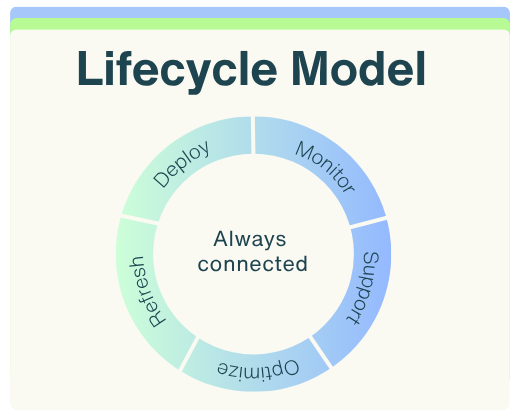
Deploy → Monitor → Support → Optimize → Refresh
Instead of treating these activities as separate processes, lifecycle management connects them through shared operational data. In AV, the room system is the shared operational unit, which unites Partners and Customers, the devices are a component of this, but the system is what we are measured on.
Deployment establishes the system of record. Monitoring adds real-time health information. Support adds incident and resolution history. Maintenance and optimization add operational intelligence. Lifecycle planning identifies what requires attention next.
The result is an operational system of record, a living understanding of the customer’s AV environment where context compounds with every stage and system.
Why Does AV Need a Lifecycle Model?
Enterprise expectations for AV are changing. Customers increasingly expect workplace technology to operate with the same visibility, accountability, and operational consistency they expect from IT. It’s an endpoint, the last endpoint of the digital workplace.
They do not simply want a room installed successfully. They want confidence that it will continue to work.
That changes the role of the Integrator.
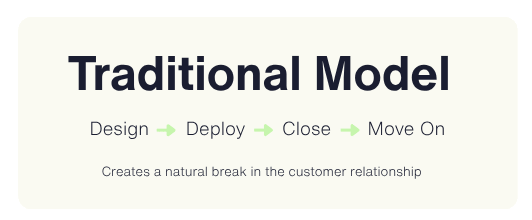
The traditional model—Design → Deploy → Close → Move On—creates a natural break in the customer relationship.
A lifecycle model—Deploy → Monitor → Support → Optimize → Refresh—keeps the Integrator connected.
Data Is the Foundation
Lifecycle management starts with data. What was deployed? Where is it? How is it configured? What other devices make up the room? What documentation exists? What has happened since deployment? What has failed? What was done about it? What requires attention next?
Without a shared operational record, those answers are often scattered across project-management tools, spreadsheets, manufacturer portals, ticketing systems, and individual technicians. Even when the data exists, teams may not know whether it reflects the current reality.
Proactive AV Lifecycle Management connects that context into a shared operational reality, a single source of truth — so Sales, Project Operations and Support can get and act on the data they trust in seconds.
From Data to Action
Data alone is not the goal. The value comes from what the organization can do with it.
Data → Visibility → Action → Intelligence → Lifecycle Value
Accurate deployment data enables monitoring. Monitoring creates visibility. Visibility triggers support workflows. Incident and maintenance history create intelligence. Lifecycle intelligence informs future action.
Each stage makes the original system record more valuable.
What Does This Mean for Integrators?
It changes the customer relationship. Instead of returning only when the customer has another project or a support ticket, the Integrator can stay connected throughout the technology lifecycle.
- Documentation & Asset management
- Compliance assistance
- Proactive monitoring
- Managed support
- Scheduled maintenance
- Operational reporting
- Optimization
- Lifecycle planning
- Refresh recommendations
The Integrator moves from project provider to Lifecycle Partner. And recurring revenue becomes the result of delivering recurring value at every stage of the lifecycle because.
Where Does pivot Fit?
pivot was built to enable this operating model. We describe pivot as the Operational System of Record for AV because it connects the system data and workflows required to manage AV throughout its lifecycle.
The goal is not another isolated AV tool. It is a trusted operational layer connecting deployment, monitoring, support, maintenance and lifecycle intelligence — one source of truth for what is actually in the customer environment, that is integrated with the workflows and IT systems. User-friendly so that Integrator Teams, their Customers and Partners can access, maintain and act in real time.
Because the future of AV is not simply about delivering better projects. It is about managing what happens after the project.
See Proactive AV Lifecycle Management in action.
.webp?width=900&name=msp%20(1).webp)